In our previous exploration of the alchemy of color, we unveiled how cobalt births the blues and gold creates the precious ruby reds that dance within glass. Yet there exists another mystery, perhaps even more profound: why doesn't molten glass—heated to a scorching 1500°F—shatter upon the cooling silver beneath it? How do the rough powder particles applied with a simple brush transform into surfaces so flawlessly smooth they mirror light like frozen lakes?
The answer lies not in chemistry, but in physics—in the invisible molecular battles that rage within the glowing kiln. This knowledge represents one of the most guarded secrets of Tbilisi artisans: the mastery not merely over color, but over the fundamental forces that govern matter itself. Every piece of authentic cloisonné enamel is a testament to the human intellect's triumph over thermal expansion, surface tension, and the relentless march of molecular physics.
The Core Challenge: A Delicate Dance of Expansion
The Invisible Adversary — CTE
In the world of the enameling process, there exists an invisible enemy capable of destroying months of painstaking work in a single, catastrophic moment. Its name is the Coefficient of Thermal Expansion, or CTE—a fundamental property that governs how much a material grows when heated and shrinks when cooled.
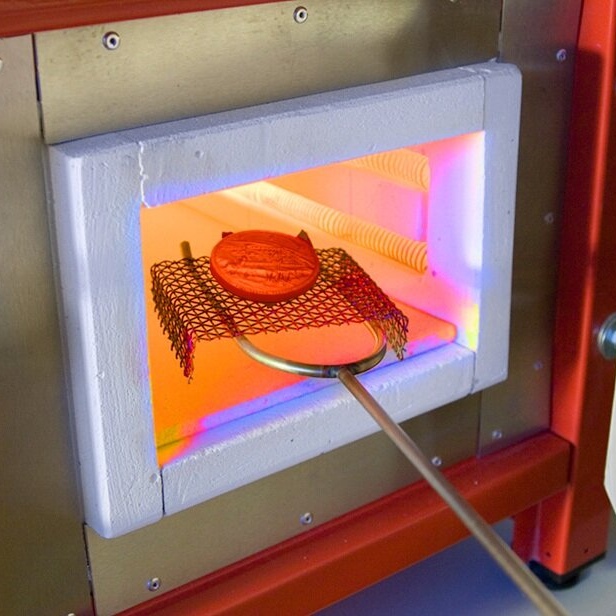
Picture this: as a piece rises to 1500°F in the kiln, both the silver base and the enamel expand. If the enamel expands at a different rate than the silver, disaster awaits. During cooling, the materials engage in a silent war of contraction. The enamel surrenders with that heartbreaking sound familiar to every enamelist—the sharp crack of failure. This is precisely why inferior enamel firing techniques produce pieces that seem perfect upon completion, only to develop hairline fractures days or weeks later.
Forging the Perfect Union
True mastery lies in transforming this adversary into an ally. Master enamelist Nino Kartsivadze, like the most skilled Tbilisi artisans before her, has devoted decades to understanding the precise dance of thermal expansion. The solution requires selecting enamels with a CTE just slightly lower than that of silver. This seemingly minor difference creates a physical miracle. As the piece cools, the silver contracts marginally more than the enamel. Rather than pulling apart, the metal essentially "embraces" the glass, creating what materials scientists call beneficial compressive stress. This stress doesn't weaken the enamel—it transforms it into something approaching the indestructible. This is why authentic handmade Georgian enamel not only survives centuries but actually grows more beautiful with age.

From Powder to Ocean: The Magic of Viscosity and Surface Tension
The hot enamel technique conceals yet another marvel of physics. How does rough, granular powder transform into surfaces of mirror-like perfection? The answer lies in two of nature's most elegant forces working in perfect harmony.
The Power of Surface Tension
When the kiln reaches the critical temperature for vitrification, the enamel powder melts completely, becoming a true liquid. In this molten moment, one of physics' most beautiful principles takes command: surface tension. This force compels any liquid to minimize its surface area, seeking the smoothest form possible. In the intense heat of the kiln, the molten enamel begins to "self-organize," flowing and settling until every imperfection disappears. No polishing is required—nature itself provides the finishing touch.
Mastering Viscosity
Yet surface tension is only half the equation. The true artistry lies in the precise control of viscosity—the enamel's resistance to flow. If the enamel is too viscous, it won't fill every corner. If it's too fluid, it may overflow or mix colors. A master craftsman reads the behavior of molten enamel like a conductor reads music. This intuitive understanding of thermal dynamics is what distinguishes authentic Minankari from industrial production.
The Art of Patience: The Birth of Authentic Minankari
Internal Stress — The Ticking Time Bomb
Once the enamel has melted and achieved its glassy perfection, the most insidious danger awaits during the cooling phase. This is where we encounter the phenomenon that answers the age-old question: "why does enamel crack?" When glass solidifies too quickly, the molecules don't have time to settle into stress-free positions. They become trapped in chaotic arrangements, storing enormous amounts of energy—internal stresses that act like ticking time bombs. A piece may appear flawless, but days or weeks later, the owner may hear that dreaded crack as the stored energy finally finds release.
The Saving Grace of Annealing
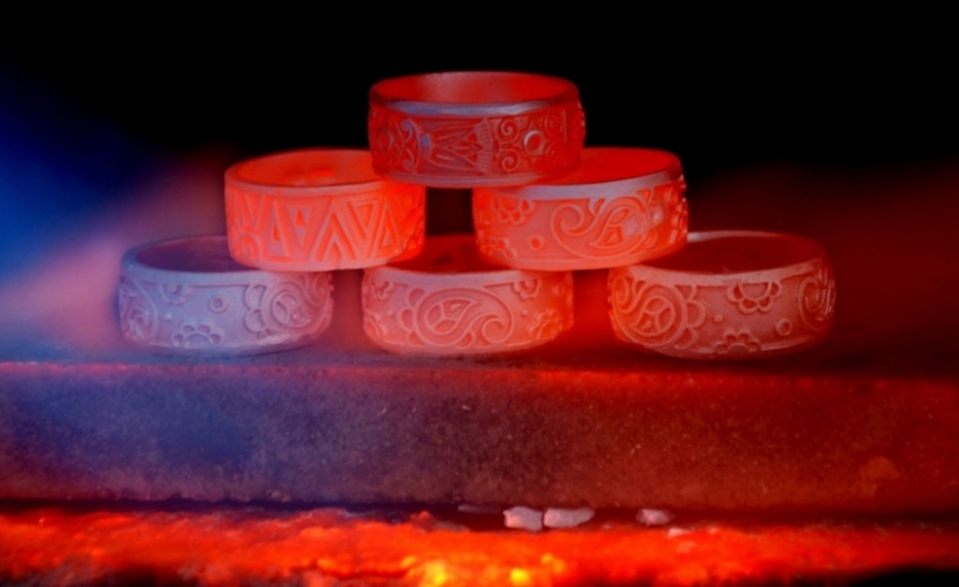
Here lies the ultimate test of a master's patience and understanding: the process of enamel annealing. This controlled, gradual cooling can take hours or even days. During this seemingly inactive period, a crucial molecular reorganization occurs. The glass molecules gradually migrate into positions of minimum stress, and internal tensions slowly dissipate. It is in this patient waiting that authentic Minankari is truly born—not just beautiful, but built to last for centuries.

Now you understand why each piece of Nino Kartsivadze's cloisonné enamel represents a dual miracle: the chemical miracle of color and the physical miracle of structure and permanence. These are not merely decorative objects, but tangible proofs of humanity's ability to command the elemental forces of nature.
When you hold a piece of authentic Minankari, you possess an object in which the full power of modern physics has been harnessed and made subservient to ancient traditions of beauty. This is the true value of authentic Georgian cloisonné—not just beauty, but beauty protected by the immutable laws of physics.